What to Put in a Weekly Reset (A Gentle 20‑Minute Routine)

Sunday evening has a particular feeling. The week isn’t quite over, the next one hasn’t started, and your brain is already halfway into Monday — listing everything you didn’t get to.
A weekly reset is a short, gentle way to close one week and open the next. Not a three-hour planning session. Not a color-coded spread. Just one page, about 20 minutes, and a few honest questions.
Here’s what to put in it.
What a weekly reset is (and isn’t)
A weekly reset is a quick check-in where you look back, clear what’s unfinished, and choose a few things for the week ahead.
It is not a full plan for every hour of your week. The point is to walk into Monday knowing what matters — and knowing what you’ve already decided can wait.
What to put in your weekly reset
1. Last week: what worked and what drained you
Start by looking back — for two minutes, not twenty. Write down:
- What worked. A routine that helped, a conversation that went well, a task you finally finished.
- What drained me. The meeting that ran long, the errand that ate your Saturday, the thing you kept putting off.
No spiraling, no grading yourself. You’re just noticing patterns so next week can have a little more of the first list and a little less of the second.
2. Still unfinished: carry it or drop it
Every week leaves loose ends. List them, then make one honest decision for each: carry it into next week, or drop it.
Dropping is allowed. Some things were never that important. Some can be handed off. Some can simply stop living rent-free in your head.
3. This week: pick three, then give them a day
Choose the week’s 3 — the three things that would make this week feel like it went okay. Not ten. Three.
Then look at the week at a glance, Monday to Sunday, and give each of the three a rough day. Appointments and fixed commitments go in too, so you can see where the space actually is.
There’s room for a short not this week list as well. Writing something there is a decision, not a failure.
4. One thing for you this week
Add one thing that’s just for you. Not productive. Not optional. A walk, a library trip, an early night, a coffee with a friend.
It’s easy to skip this part. Don’t. A week with nothing in it for you is a week you’ll be running on empty by Thursday.
5. Then close it
Fold the page up. The week can start on Monday, not tonight.
Make it easier with one page
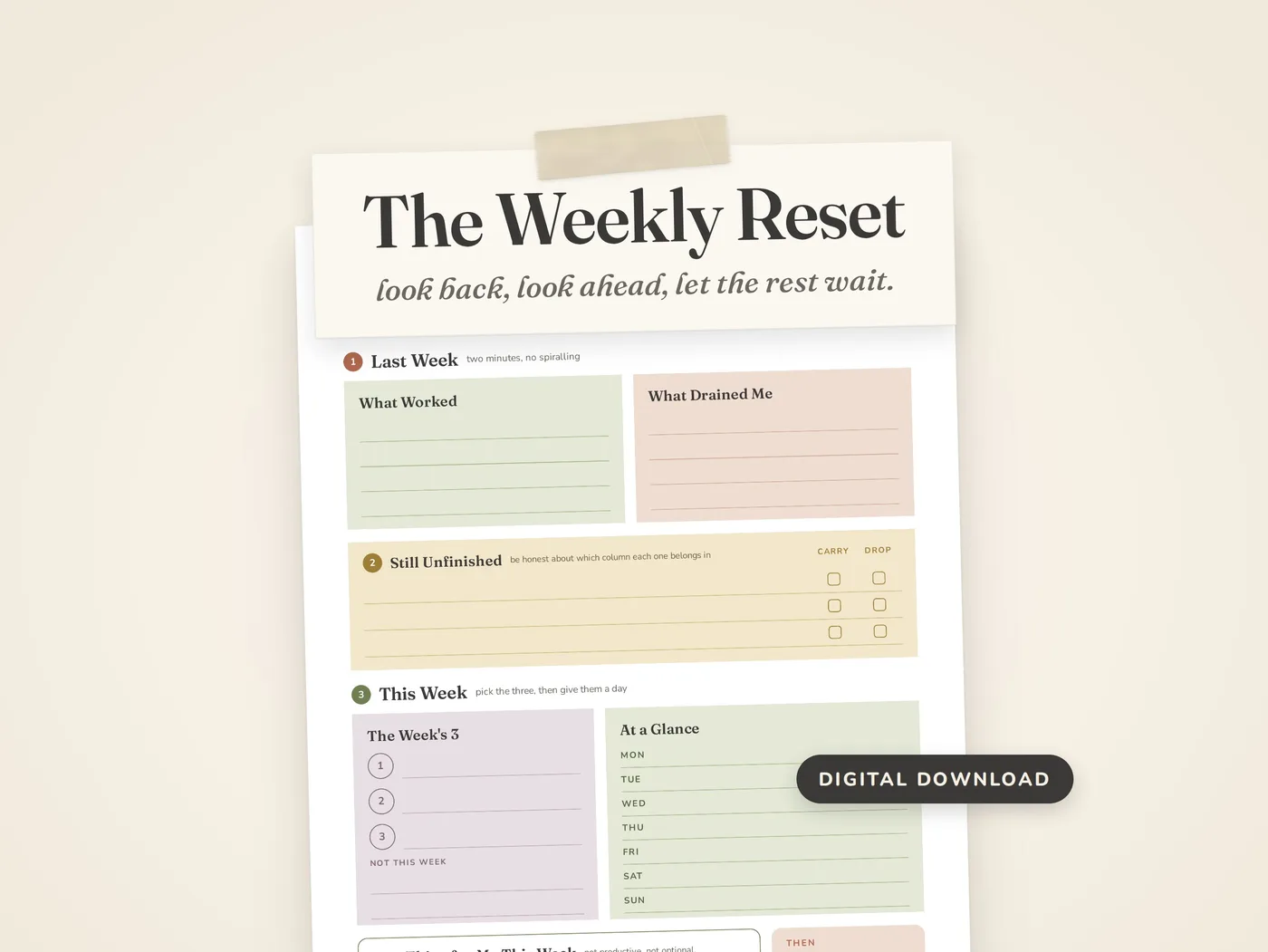
You can do all of this on a blank sheet of paper. If you’d rather not build the structure every Sunday, the Weekly Reset printable puts it on one page: Last Week (What Worked / What Drained Me), Still Unfinished with carry-or-drop boxes, The Week’s 3, Not This Week, the week At a Glance, and One Thing for Me This Week.
If your head feels too full to even start, do a quick brain dump first — then use it to fill in your reset. Both pages come together with the printable sticky notes in the Reset Bundle.
Weekly reset FAQ
What is a weekly reset?
A weekly reset is a short check-in, usually on a Sunday, where you look back at the week you just had, decide what to carry forward or drop, and choose a few things for the week ahead. It’s a reset, not a full planning session.
How long should a weekly reset take?
About 20 minutes. If it’s taking an hour, you’re planning, not resetting. Keep it to one page and stop when the page is full.
What day should I do my weekly reset?
Sunday afternoon or evening is the most common, but any day works. Friday afternoon is great if you want to close the week before the weekend. Pick the day you’re most likely to actually do it.
What’s the difference between a weekly reset and a brain dump?
A brain dump empties everything out of your head right now. A weekly reset looks back at the week and chooses what matters next. Many people do a quick brain dump first, then use it to fill in their weekly reset.
Try it this Sunday: set a timer for 20 minutes, look back, pick your three, and add one thing just for you. Want a head start? Get the free Brain Dump Lite to clear your head first.