How to Remember What to Ask Your Doctor (When Your Mind Goes Blank)

Short answer: keep a running list of questions between visits, put the one you most need answered first, bring the list in with you, and write the next steps down before you leave. The prep takes about 5 minutes, and it means you don’t have to rely on remembering anything on the spot.
If you’ve ever thought of the perfect question in the car, seven minutes after leaving, you’re in good company. People in patient forums describe the same thing over and over: feeling fine in the waiting room, going blank the moment the doctor asks “any questions?”, and then not quite remembering what was said about the follow-up. It isn’t a memory problem. It’s what happens when a short, important conversation lands on a busy brain.
Why does your mind go blank at the doctor?
A few things stack up at once. Appointments are short. You might be nervous, in pain or tired. The doctor often asks for questions right at the end, when you’re already thinking about getting dressed or paying. And you’re trying to listen, remember and explain all at the same time. Writing things down takes the remembering part off your plate.
How to remember your questions before the visit
1. Keep a running list between appointments
Questions show up at random times: in the shower, at 2 a.m., halfway through a show. Write each one down when it appears, on the same page or note every time, so they’re all in one place when the appointment comes.
2. Put the most important question first
Before you go, read the list and circle the top two or three. Ask those first, while there’s the most time. If you only get one answer, make it the one you most need.
3. Note what’s changed
New medications, a symptom that got worse, a test result, a new specialist. These are easy to forget in the room and often matter most to the doctor. A line or two is enough.
4. Check what to bring
Your list, a current medication list, your insurance card and ID, any forms or referrals, and glasses or hearing aids if you use them.
What to do in the room
- Say you have a list. “I wrote a few things down so I don’t forget” at the start of the visit is completely normal.
- Start with your top question, not the easiest one.
- Ask for a repeat if something goes by too fast: “Could you say that again so I can write it down?”
- Bring someone along if you can. A second person can listen, take notes and ask follow-up questions.
How to remember what the doctor said
| When | What to write down |
|---|---|
| Before you leave the room | The next steps and who does what |
| In the car or waiting room | What you talked about, in your own words |
| Same day | Follow-up dates in your calendar |
| Later | Anything you still want to ask, for the portal or next visit |
Write instructions in the words the doctor used if you can. It’s also fine to ask whether a visit summary will be posted to your patient portal, or to ask the doctor to name the one or two most important things before you go.
A two-page kit for every appointment
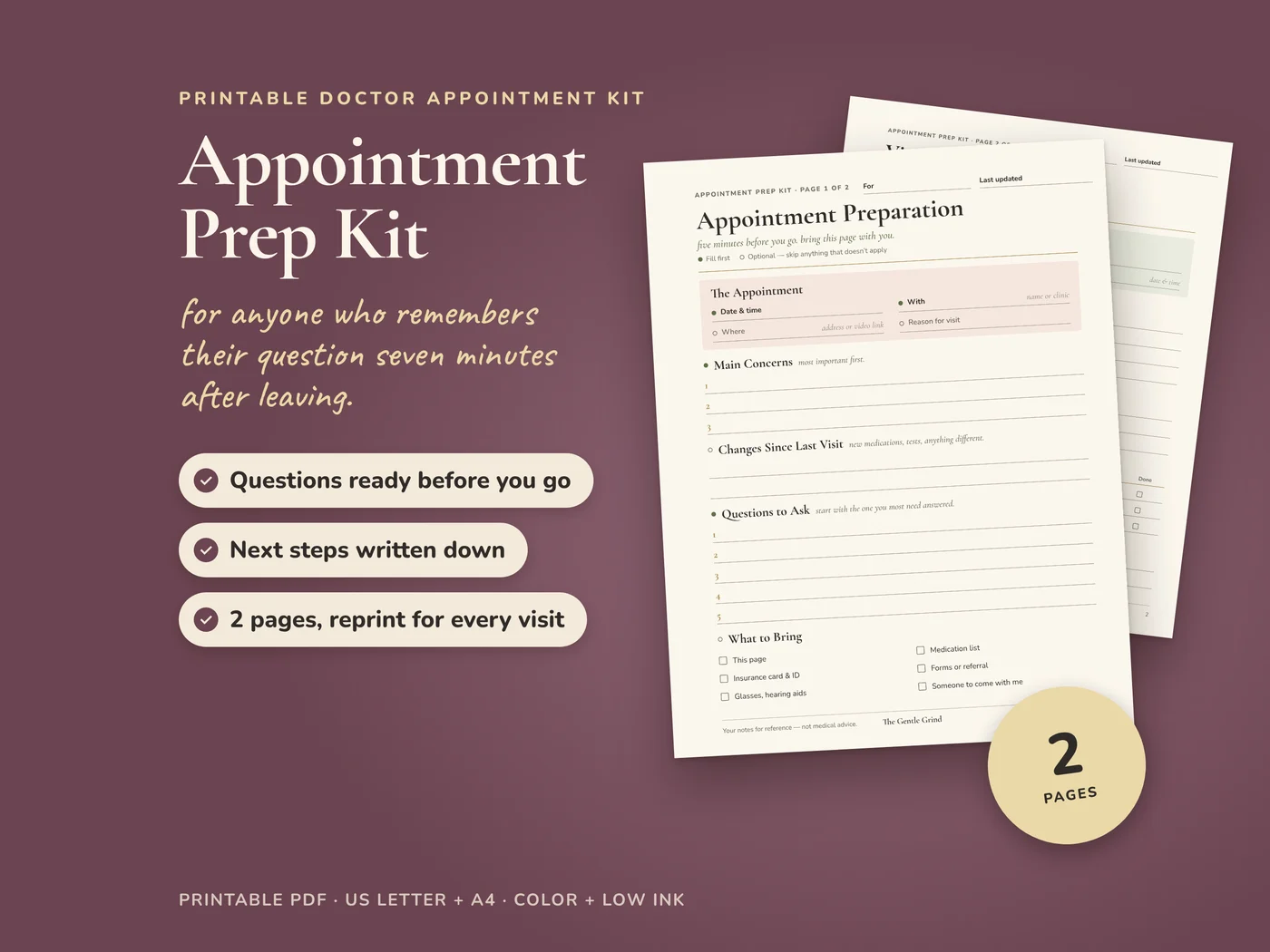
You can do all of this on the back of an envelope. If you’d like it laid out for you, the Doctor Appointment Prep Kit has 2 pages: Appointment Preparation (main concerns, what’s changed, questions to ask and a what-to-bring checklist) and Visit Notes & Next Steps (what was said, instructions, next steps with dates). Print a fresh set for every visit. It comes in US Letter and A4, in color and low ink.
Want the whole system? The Medical Binder includes both pages, plus Medical Essentials, Providers & Pharmacy and a Current Medications list. Our guide to what to put in a medical binder walks through all five pages, and if your head feels too full to start, a quick brain dump is a good way to get the questions out first.
These are your own notes. They aren’t medical advice and don’t replace anything your doctor or pharmacist tells you.
Doctor appointment FAQ
Why does my mind go blank at the doctor?
It’s very common. Appointments are short, you may be nervous or unwell, and the doctor asks ‘any questions?’ just as the visit is wrapping up. Writing your questions down beforehand means you don’t have to remember them on the spot.
How many questions should I bring to an appointment?
Write down everything, then circle the two or three that matter most and ask those first. If there’s time left, move down the list. Anything you don’t get to can go to the patient portal, a phone call or your next visit.
Is it okay to read from a list at the doctor’s office?
Yes. Saying ‘I wrote a few things down so I don’t forget’ at the start of the visit is normal and helps the doctor plan the time. You can also hand them the list.
How do I remember what the doctor said?
Write the main points and next steps down before you leave, or right after in the car or waiting room. You can also ask the doctor to repeat the key points, check whether a visit summary will be posted to your patient portal, or bring someone along to take notes.
What should I bring to a doctor’s appointment?
Your list of questions, a current list of your medications, your insurance card and ID, any forms or referral letters, and anything you need to see or hear well, like glasses or hearing aids. Bringing a trusted person can help too.
Try this today: start a note called “Ask the doctor” and add the next question the moment it pops into your head.