What to Put in a Just-in-Case Binder (and What to Leave Out)
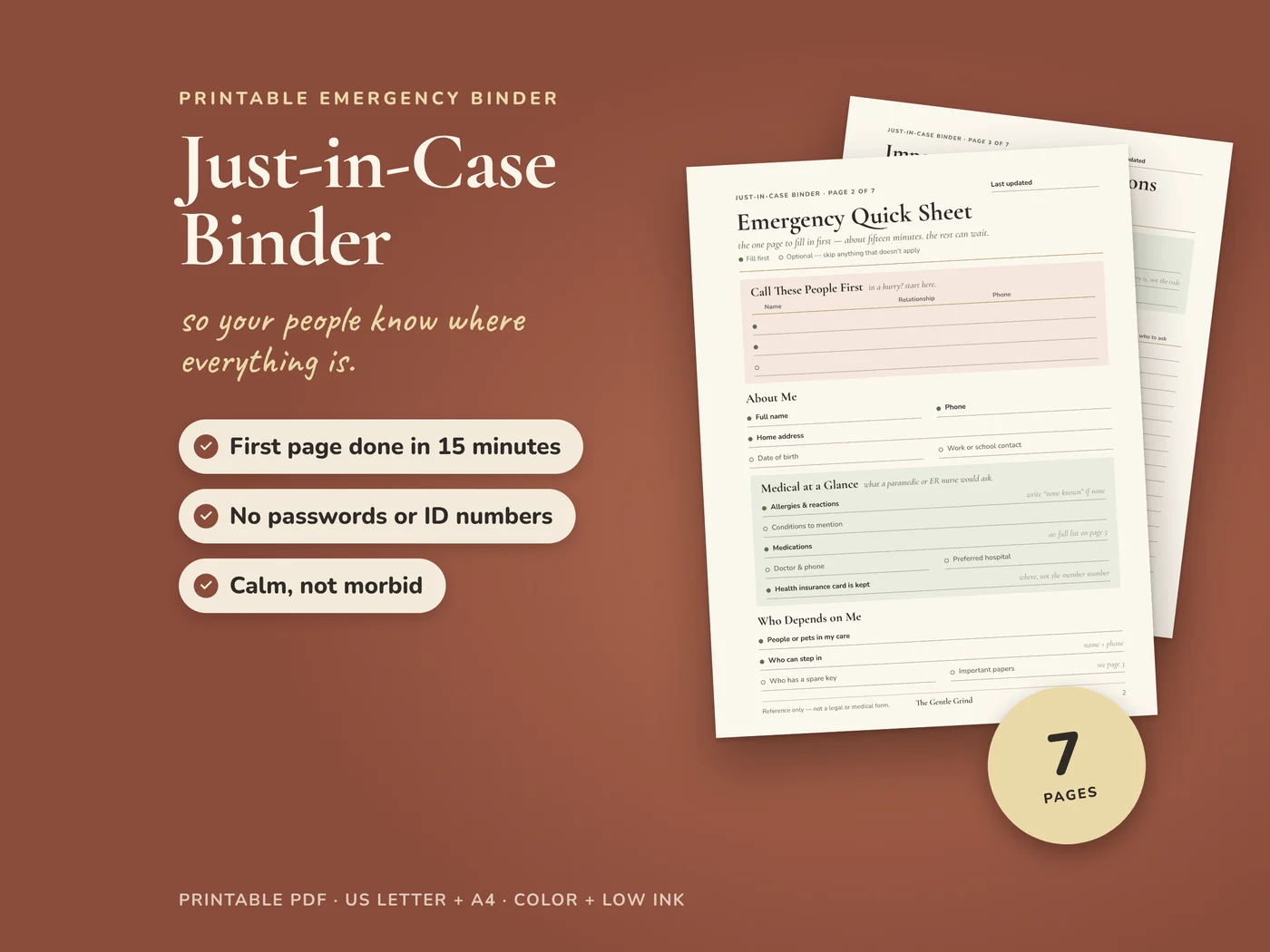

Short answer: a just-in-case binder holds the information someone would need to keep your life running if you couldn’t be reached: who to call, where your important documents are, what accounts and bills exist, basic medical information and how the household runs. Write down where things are kept, never your passwords or full account numbers. Start with a one-page emergency sheet; it takes about 15 minutes.
Most people who start one of these binders get stuck in one of three places. The binder is so big that it never gets finished. It feels a bit grim, so it gets put off. Or there’s a nagging worry about writing sensitive details down. Starting small and recording where things are, not the details themselves, takes care of all three.
What goes in a just-in-case binder?
Think about the questions someone would actually have if you were in the hospital for a week, or simply unreachable. These five sections answer most of them.
1. Who to call first
Two or three people, with their relationship to you and a phone number. Add who depends on you (children, a parent you help, pets) and who can step in for them. In a stressful moment, this is the page people reach for first, so keep it on one page.
2. Where your important documents are
Not the documents themselves, just where they live. For each one, note where the original is kept and whether you have a copy saved:
- Birth certificates and passports
- Social Security cards
- Car titles and registration
- Lease, deed or mortgage papers
- Insurance policies
- Will or other legal papers, if you have them
- Recent tax returns
“Grey fire box, hall closet” is the kind of answer that helps.
3. What accounts and bills exist
This is where many families get stuck: one person runs the finances and the other doesn’t know what exists. List each bank, card, loan and regular bill, the company, the last four digits only, and how it’s paid (automatic or manual). Add any subscriptions you’d want cancelled.
4. Basic medical information
Allergies, current medications, conditions worth mentioning, your doctor and pharmacy, and where your insurance card is. Write it yourself, keep it short, and update it when your medications change. It’s for reference, not medical advice.
5. How the household runs
Drop-off and pickup times, trash day, where the water shut-off and breaker panel are, a neighbor who can help. If you have pets, add food, routine and who can take them.
What should you leave out?
The one rule that makes the binder safe to keep: write where, not what.
| Write this | Not this |
|---|---|
| “Passwords are in our password manager; Sam knows how to get in.” | The passwords themselves |
| “Checking at Harbor Bank, ending 4821” | The full account number |
| “Passports: fire box, green folder” | Passport or Social Security numbers |
| “Alarm code: ask Joy” | The alarm code |
If the binder were ever lost, it would show what exists and where to look, not hand over the keys.
How do you start without getting overwhelmed?
Big binders with hundreds of empty fields are the main reason people never finish. Try this instead:
- Do the emergency sheet first (about 15 minutes): who to call, your basics, medical at a glance and who depends on you. That page alone helps.
- Add one page whenever you have a pocket of time, in any order. Skip anything that doesn’t apply to you.
- Tell one or two people where the binder is.
- Put two review dates on your calendar, about six months apart.
If your head feels too full to start, a quick brain dump can help you see what you’d want someone else to know. And if you already do a weekly reset, adding one binder page to it is an easy way to keep going.
Where should you keep it?
Somewhere one or two trusted people can find and reach without you, like a labeled shelf at home or a fire-resistant box they can open. Keep the originals of important documents where they already are; the binder just points to them. Some people also keep a photo or scan of the emergency sheet somewhere their partner can reach.
A just-in-case binder you can actually finish
You can do all of this on plain paper. If you’d like it laid out for you, the Just-in-Case Binder printable has 7 pages: Start Here, an Emergency Quick Sheet, Important Document Locations, Accounts & Bills, Medical Essentials, Household Handoff and an optional Pet Care page. Filled dots show what to fill in first, hollow dots mark what’s optional, and every page has a “last updated” line. It comes in US Letter and A4, in color and low-ink versions, with a wide margin for hole punching.
Planning the months ahead too? The Gentle Start 2027 printable calendar is a good spot for those twice-a-year review dates.
Just-in-case binder FAQ
What should go in a just-in-case binder?
Five things cover most of it: who to call first, where your important documents are kept, which accounts and bills exist and how they’re paid, basic medical information, and how the household runs day to day. Pets get their own page if you have them.
Should I write my passwords in an emergency binder?
No. Write where your passwords are kept instead, such as the name of your password manager or the drawer where a notebook lives, and who knows how to get in. The same goes for full account numbers and ID numbers: note where the document is, not the number on it.
Where should I keep my just-in-case binder?
Somewhere one or two trusted people know about and can reach without you, like a labeled shelf or a home safe they can open. Tell them where it is. A binder nobody can find doesn’t help.
How often should I update it?
Look it over twice a year and whenever something big changes, like a new job, a move, a new doctor or a new account. A ‘last updated’ date on each page shows your people how current it is.
How long does it take to make a just-in-case binder?
The most useful page, a one-page emergency sheet, takes about 15 minutes. The rest can be filled in a page at a time over a weekend or a few weeks. You don’t have to finish it all at once for it to help.
Is a just-in-case binder the same as a will?
No. A just-in-case binder is a reference that helps people find information. It isn’t a legal document and doesn’t give anyone authority to make decisions or access accounts. For wills, powers of attorney and similar papers, talk to a qualified professional, then note in your binder where those papers are kept.
Try this tonight: on one sheet of paper, write the two people you’d want called first, where your insurance card is, and who could look after anyone who depends on you. That’s the start of your binder.